

Who Is Responsible for Renovation Waste, You or the Builder?
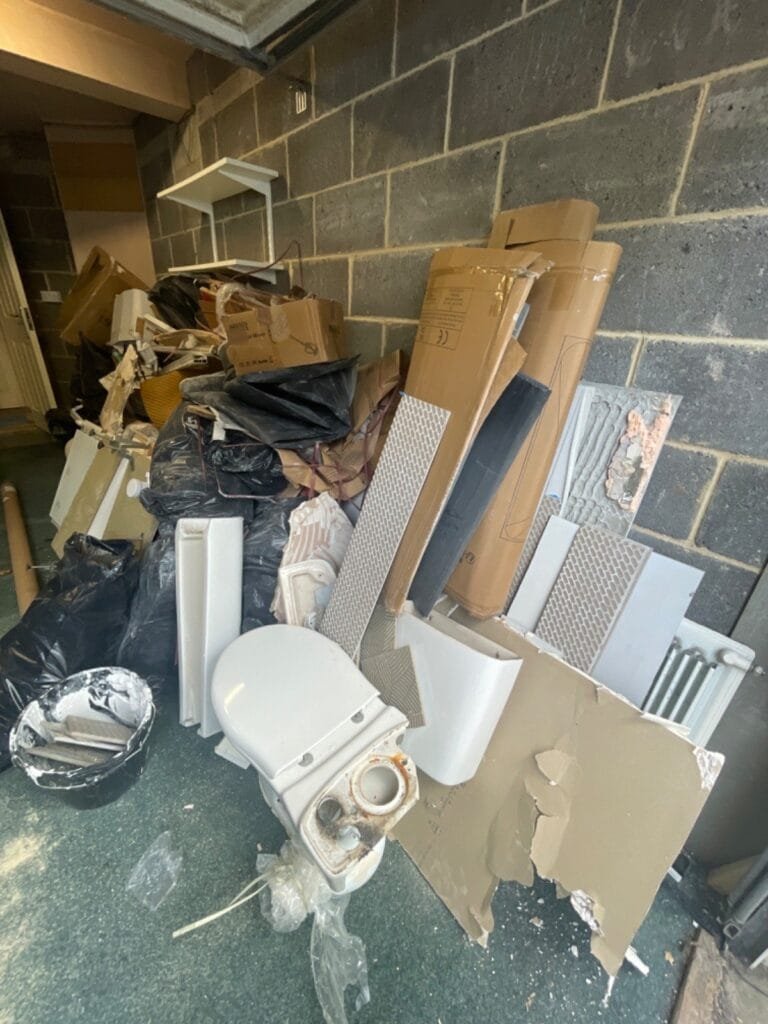
When a builder, plumber or electrician produces waste working on your home, that waste is their responsibility to remove and dispose of legally, and the cost should be in their price. GOV.UK guidance for councils says a tradesperson working on a property is responsible for the waste they produce. You still have a legal duty for any household waste you hand over yourself: under section 34 of the Environmental Protection Act 1990, you must take reasonable steps to make sure it only goes to an authorised person. If it is fly tipped, Leeds City Council says you could get a £200 fixed penalty or be prosecuted. So write waste into the contract, check the licence before anyone loads a van, and keep the receipt. If you are clearing the rest yourself, Kruze removes building waste from £24.99, with rubble priced by weight from £45 for 50kg. We are a licensed waste carrier (CBDU597687) and give a waste transfer note on every job.
Who has to remove the waste when a builder does the work?
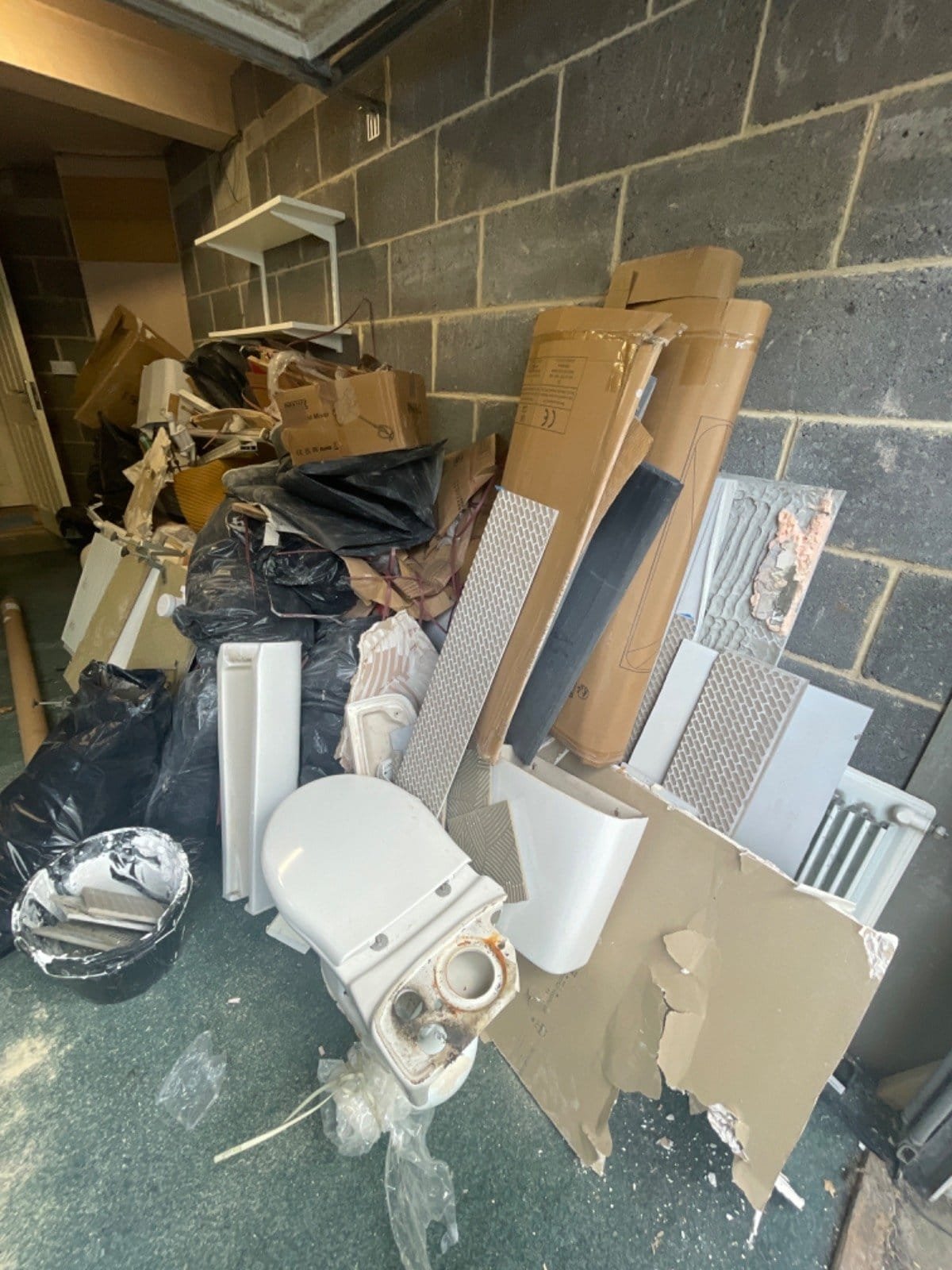
The person whose work creates it. GOV.UK guidance on household waste fixed penalties is direct: a tradesperson working on a property is responsible for the waste they produce. Because you are not producing it, you are not transferring it to them, and the household duty of care does not apply to that waste. Source: GOV.UK, guidance on household waste duty of care fixed penalty notices, checked 27/10/2026.
That covers the old kitchen units a fitter rips out, the tiles a tiler knocks off, the plasterboard offcuts and the packaging from the new boiler. The tradesperson has the business duty of care for it, which means using licensed carriers and permitted sites and keeping waste transfer notes.
The line moves when you do part of the job yourself. If you strip the old bathroom out before the plumber arrives, that waste is yours.
What is my duty of care as a householder?
Section 34(2A) of the Environmental Protection Act 1990 says the occupier of a domestic property must take reasonable measures to make sure household waste produced on the property is only transferred to an authorised person. Source: legislation.gov.uk, Environmental Protection Act 1990, section 34, checked 27/10/2026.
In plain terms, if you hand your waste to someone, check they are allowed to take it. The GOV.UK guidance lists the kind of evidence that shows you did: a record of the carrier’s registration number, a receipt showing the business details, or a copy or photo of their licence. Householders do not have to keep waste transfer notes, but a note or receipt is the simplest proof.
What happens if a cowboy fly tips it?
Councils can fine the householder whose waste is found dumped, if they did not take reasonable care. Leeds City Council says that if fly tipped waste is traced back to you, you could receive a £200 fixed penalty notice or be prosecuted through the courts. Source: Leeds City Council, get rid of unwanted items, checked 27/10/2026.
Nationally, GOV.UK guidance sets household duty of care penalties between £150 and £600, with a default of £200. Taken to court, the offence carries an unlimited fine on indictment. Our guide to fly tipping fines in Leeds goes into the detail.
| Who produced the waste | Who must dispose of it | Your risk |
|---|---|---|
| The builder or tradesperson, during the job | The tradesperson | Low, but check their licence anyway |
| You, before or after the job | You | You must hand it to an authorised carrier |
| You, handed to “a man with a van” on cash | You | Fine if it is fly tipped and you did not check |
| A licensed carrier with a transfer note | The carrier | Low, keep the note or receipt |
What should go in the contract about waste?
Agree it in writing before work starts. A few lines in the quote save an argument later.
- Who removes the waste, and that it is included in the price.
- How it leaves, by the builder’s own licensed vehicle, a skip, skip bags or a licensed carrier.
- The carrier’s registration number, so you can check it.
- Where the skip goes, and who arranges any permit if it sits on the road.
- What happens to items you want to keep, such as a working boiler or salvaged doors.
- The site is left clear, including the garden and the front of the house.
Old windows and doors are a common sticking point after a refit. Our guide to getting rid of old windows and doors in Leeds explains who should take them away and what the council will accept.
Leeds City Council’s own advice is to pay by card or bank transfer, get a receipt or waste transfer note, and ask where the waste is going. A genuine carrier does not mind the question.
How do I check a builder or waste carrier’s licence?
Ask for their waste carrier registration number, then search it on the Environment Agency public register. It takes a couple of minutes. Check the name matches the business you are paying.
In Leeds, you can also look for members of the Leeds Accredited Waste Carrier Scheme. The council says LAWCS members are accredited by Leeds City Council and sign up to a code of practice, and that using one can help you meet your duty of care. Kruze is a LAWCS member. Our guide to choosing a licensed rubbish removal company in Leeds has the full checklist.
Warning signs are the same everywhere. A price far below everyone else, cash only, no business name, no address and no paperwork.
Can I take renovation waste to the tip myself?
Your own household waste, by car, yes, but check the site’s page for limits on rubble and plasterboard before you load up. Trade waste is a different matter. Leeds recycling centres do not accept trade or business waste, and a builder cannot drop their waste at a household tip. Vans and trailers need a permit. Source: Kirkstall household waste recycling centre, checked 27/10/2026. The builders waste and rubble rules page sets out the limits.
What does Kruze charge to clear renovation waste?
When the builder has left you with a pile, or you have done the strip out yourself, we price from the same tables as every job.
| Waste | Kruze price |
|---|---|
| Small amount of building waste | from £24.99 |
| Rubble, tiles, soil, 50kg | £45 |
| 100kg | £68 |
| 200kg | £136 |
| 500kg | £340 |
| Bath full of tiles | £108 |
| Shower tray | £54 |
| Toilet or bath | £24 each |
| Light mixed waste, quarter van load | from £50 |
Heavy waste is priced by weight because it reaches the van’s weight limit long before it fills the space. Every job comes with a waste transfer note naming us as the carrier. See our building waste removal service.
FAQs
Is the builder legally responsible for the waste from my extension?
GOV.UK guidance says a tradesperson working on a property is responsible for the waste they produce. Agree in the contract that removal is included, and check their licence.
Can I be fined if my builder fly tips the waste?
Waste the builder produces is their responsibility. Waste you produce and hand over is yours, and Leeds City Council can issue a £200 fixed penalty if it is fly tipped and you did not check the carrier.
Do I need a waste transfer note as a householder?
You do not have to keep one, but a note or receipt with the carrier’s details is the easiest way to show you met your duty of care. Kruze gives one on every job.
What if my builder leaves the rubble behind?
Raise it with them first, especially if the contract says removal is included. If you need it gone, we collect rubble by weight from £45 for 50kg.
Kruze is a licensed waste carrier (CBDU597687) based in Leeds, serving Leeds, Bradford, Halifax, Huddersfield, Wakefield, Harrogate and Barnsley. Updated 27/10/2026.
Send a photo of the leftover waste on WhatsApp for a fixed price, or call 07436 120271. We answer 24 hours a day, 7 days a week.