

Builders Waste Disposal Rules: Who Is Responsible
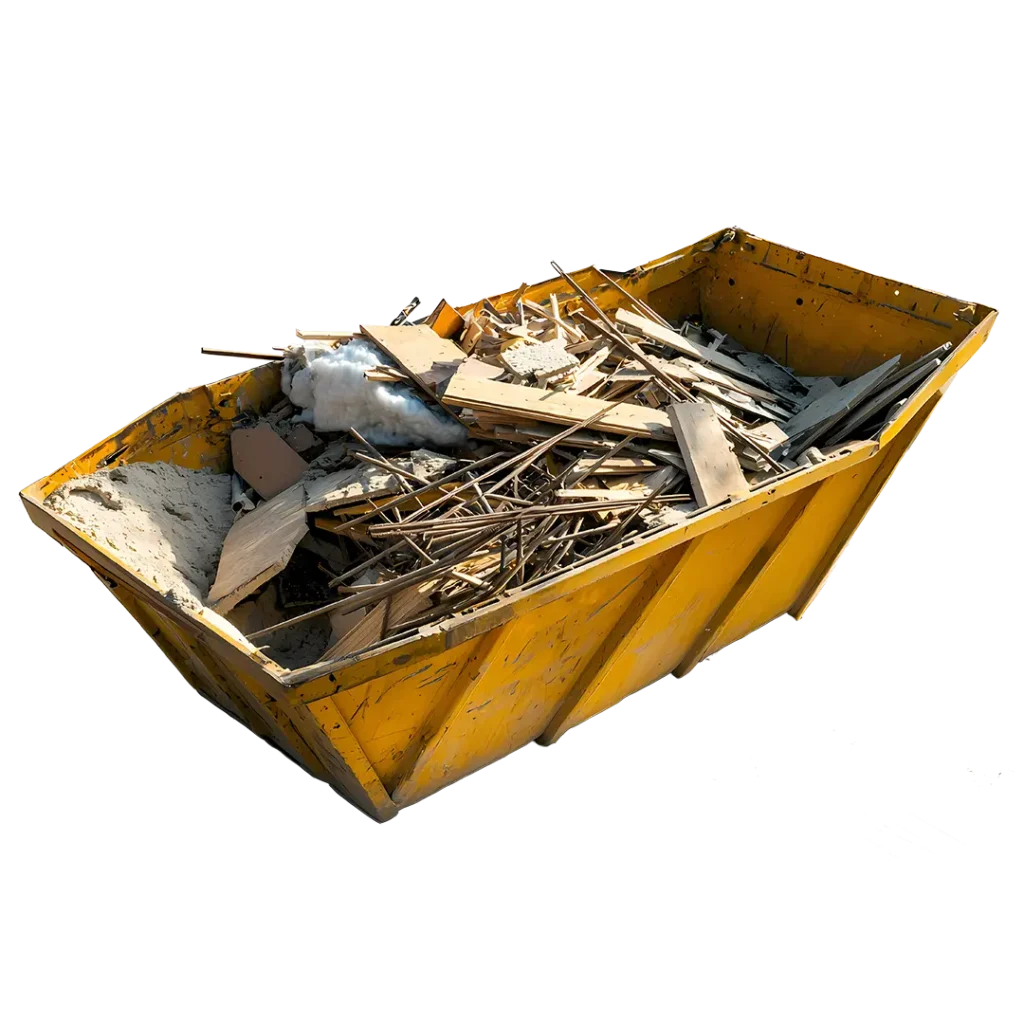
If you are a householder having building work done, the waste is almost always the builder’s problem, not yours. Once a tradesperson brings waste into existence on your property and takes it away, it is their controlled waste. The usual exemption that lets a business carry its own waste without registering specifically does not apply to construction or demolition waste, so a builder moving rubble in their own van needs upper tier waste carrier registration. So before you pay anyone to remove rubble, ask your builder what their disposal arrangement is and get it in writing on the quote.
Here is the part that most articles get flatly wrong, so read this bit twice.
If your builder dumps that waste, the duty of care that got broken is theirs, not yours. Waste from building work you paid someone to do is industrial waste in law, and the householder duty of care only covers household waste that you hand over yourself. The £200 householder penalty is not aimed at you in that situation. Anyone telling you that you get fined when your builder fly-tips is selling you a fright.
What is true is quieter and still worth acting on. Councils trace fly-tipped waste back to where it came from, and if it came off your extension you are the first person who gets asked who took it away. Have the licence number and a transfer note and that conversation lasts a minute before it moves on to the builder. Have a first name and a mobile number that no longer connects, and it lasts considerably longer. That is the real reason to get the paperwork, not a fine that was never pointed at you.
The rest of this guide covers what the rules actually say, why rubble is priced by weight and not by skip size, when a grab lorry is the right call, and why plasterboard cannot go in with everything else.
The one thing to do before work starts
Ask the builder one question. “Is disposal in your price, and can I have your waste carrier licence number?”
Three possible answers.
“Yes, it is in the price, here is my number.” Good. Write the licence number on the quote. Check it on the Environment Agency public register on gov.uk, which takes two minutes. Ask for a copy of the waste transfer note when the job is done. That is the whole job done properly.
“Yes, it is in the price,” with no licence number. That is the answer that should worry you. Waste that costs money to dispose of properly and nothing to leave in a lane is exactly where the temptation lives.
“No, disposal is yours.” Fine, as long as you knew that before you accepted the quote and not on the day the skip does not arrive. Now it is your waste, your duty of care, and this guide is for you.
This is us telling you not to book us. If disposal belongs to the builder, make the builder do it. Do not pay twice for the same tonne of brick.
Duty of care in plain English
Duty of care is the legal spine under all of this. It lives in section 34 of the Environmental Protection Act 1990, and it is genuinely two different duties wearing the same name.
Section 34(1) is the business duty. For tradespeople it means storing waste safely, only passing it to someone authorised to take it, and keeping a written record of the transfer, normally a waste transfer note kept for two years. Hazardous waste consignment notes are kept for three. Electronic notes are perfectly acceptable, so nobody needs a clipboard.
Section 34(2A) is the householder duty, and it is narrower than people think. It applies to any transfer by you of household waste produced on your property. That is the whole scope. You must take reasonable steps to check whoever takes it is authorised, and “he seemed alright and it was cash” is not a reasonable step. Fail that and Leeds City Council issues a £200 fixed penalty notice, with prosecution possible beyond it. The law lets councils in England set that penalty as high as £600, but £200 is the figure Leeds publishes, and you will see the £600 quoted at you a lot by people who have not checked.
Read those two together and you have the answer to the whole question this article is about. If you did the work, the waste is yours to hand over properly. If you paid a builder to do the work, the waste is theirs to move properly.
A waste transfer note is not admin. It is the document that ends the argument. It says who produced the waste, who took it, what it was, when, and where it went. Every Kruze job comes with one. Our licence is CBDU597687 and you can check it on the public register right now.
Why rubble is priced by weight and not by volume
This is the single most surprising thing about construction waste for most people, so here it is with numbers.
A cubic metre of general household junk, bags and broken furniture and cardboard, weighs relatively little. The same cubic metre of broken brick and concrete is heavy enough to use up a van’s entire legal payload on its own. Same space. Wildly different job.
Every vehicle has a legal payload and DVSA enforces it at the roadside. Overload a van and the fixed penalty is £100 for under 10 per cent over, £200 from 10 to 15 per cent, and £300 above that. The vehicle gets an immediate prohibition and can be immobilised where it stands until the excess comes off. Serious overloading, roughly 30 per cent and up, skips the fixed penalty and goes to court. For the record, overloading is not endorsable, so nobody is getting licence points for it, but a £300 fine and a van stuck on the hard shoulder with a load you now have to shift twice is punishment enough.
So a van full of rubble is never actually full. It hits its weight limit with the load barely past the wheel arches, and it stops there because the alternative is illegal.
That is why nobody credible quotes rubble by the cubic yard. Ours is priced honestly by weight:
| Weight | Price |
|---|---|
| 50kg | £45 |
| 100kg | £68 |
| 200kg | £136 |
| 500kg | £340 |
| 1000kg | £680 |
Rubble and hardcore removal starts from £45. Soil and muck away, plasterboard disposal and soft strip work are priced on the same weight basis.
Rough conversions so you can estimate before you call. These are our own numbers off our own weighbridge tickets, not official published figures, and they are ballpark rather than gospel. Materials vary, wet is heavier than dry, and the only number that ends up on your invoice is the one the weighbridge prints.
| Waste | What we typically see |
|---|---|
| Standard house brick | A couple of kilos each |
| Concrete paving slab, 600×600 | Tens of kilos each, and thicker slabs climb fast |
| Builder’s bulk bag of rubble | Close to a tonne when filled |
| Ripped-out bathroom, tiles and suite | A few hundred kilos |
| Small chimney breast removal | Routinely over a tonne |
One bulk bag of rubble is close to the whole 1000kg row on the price table. People routinely ring up expecting “it is only two bags” to be a £60 job. Two bags can be two tonnes. It is not a rip-off, it is a weighbridge. If the number matters to you, send photos and we will estimate it properly rather than guess at you.
Skip, van or grab lorry?
A skip works when the job runs for weeks and the waste appears gradually. Kruze skips are £242 for a 2-yard, £246 for a 4-yard, £323 for an 8-yard and £463 for a 14-yard. The catch on rubble is level loads only, a council permit if there is no driveway, all the loading is yours, and half the street may quietly contribute overnight.
A man and van works when the waste already exists and you want it gone today with the lifting included. For a bathroom strip-out or a patio lift this is normally fastest and cheapest, because you pay for the weight you have, not for a container you might not fill.
A grab lorry is for the big stuff, and it is genuinely the right tool sometimes. A grab is a tipper with a hydraulic arm that reaches over a wall and lifts loose muck straight off the ground. It shifts many times what a van can carry in one go, though the exact payload depends entirely on the lorry, so ask the operator for theirs rather than trusting a number off a blog. For a demolished garage, a dug-out driveway or a soil excavation, a grab beats twenty van runs on price and time. It needs the waste loose, reachable from the roadside, and somewhere legal for a large lorry to stand.
Straight advice. Under a tonne, use a van. One to three tonnes, get both priced. Over three tonnes of loose muck with roadside access, get a grab.
Plasterboard is legally its own thing
Plasterboard is gypsum, and gypsum cannot be landfilled together with biodegradable waste. When gypsum breaks down alongside organic material in wet, oxygen-poor conditions it produces hydrogen sulphide, which is the toxic, rotten-egg gas problem that drove the rules in the first place. Landfilling gypsum with biodegradable waste has been banned in England and Wales since 2005, tightened to a full ban in April 2009. Plasterboard has to be separated out, and if it does go to landfill at all it has to go to a cell that takes no biodegradable waste.
The practical result on your job:
- Plasterboard must be kept separate. Not in the general pile, not under the general pile.
- Keep it dry. Wet plasterboard is heavier and can be refused or recharged.
- In a skip, up to 10% of the load can be plasterboard. Above that there is a £35 contamination charge.
- Dedicated plasterboard bags, 1m2, are £105 with Kruze.
- Clean, dry, separated plasterboard is recyclable back into new board. Contaminated plasterboard is not.
If you are ripping out a ceiling, put a separate pile down on day one. Doing it at the point of collection means someone is sorting board out of a mixed heap on your driveway, and that time is on your bill.
Everything compared
| Route | Best for | Cost | Who loads | Main catch |
|---|---|---|---|---|
| Builder’s own disposal | Any job where they created the waste | Should be in their quote | Them | Get the licence number in writing |
| Man and van, by weight | Bathrooms, patios, one-off rubble | From £45, then by weight table | Us | Priced on weight, so estimate honestly |
| 2-yard skip | Small, slow, heavy jobs | £242 | You | Permit if no driveway, level load only |
| 8-yard skip | Multi-week renovation | £323 | You | Plasterboard capped at 10% of load |
| 14-yard skip | Bulky light waste, strip-outs | £463 | You | Too big for rubble, weight limits bite first |
| Grab lorry | Loose muck over 3 tonnes | Quoted per load | Machine | Needs roadside access and space |
| Plasterboard bag | Board only, kept dry | £105 per 1m2 bag | You | Must stay separate and dry |
| Man with a tipper, cash, no licence | Nothing | £80 now, £200 fixed penalty later if it was your own waste | Him | No paperwork, no way to point the council at anyone but you |
The bit tradespeople actually get caught by
If you are the builder reading this, three things.
Registration is not optional, and it is upper tier. Carrying your own waste normally only needs lower tier registration, but construction and demolition waste is carved out of that exemption. Move rubble you produced yourself, in your own van, and you need upper tier registration, renewed every three years. Plenty of small trades genuinely do not know this.
Your customer’s tip is not your tip. Leeds is explicit that its household waste recycling centres are for household waste only, not trade waste, and that taking trade waste there can get you fined or imprisoned. Sign-written vehicles, vans and pickups need a Leeds waste permit, and that permit only covers the free disposal of household waste. It is not a trade pass.
The paperwork protects you as much as the customer. When a load gets traced, the person holding a transfer note walks away and the person holding nothing does not.
Our rubble service is priced and explained on our rubble and hardcore removal page. We work with trades across Leeds, Bradford, Halifax, Huddersfield, Wakefield, Harrogate and Barnsley, and we hand over a transfer note on every load.
FAQs
Who is responsible for builders waste, me or the builder?
Normally the builder. Waste a tradesperson creates and removes is their controlled waste, and they need to be a registered carrier to move it. Ask before work starts whether disposal is in the price and get their waste carrier licence number written on the quote.
Can I be fined if my builder fly-tips the waste from my house?
Not under the householder duty of care, no, and you will see that claim made all over the internet. Waste from work you paid a builder to do is their industrial waste. The householder duty in section 34(2A) only covers household waste you hand over yourself, so the £200 Leeds penalty is aimed at the builder’s conduct, not yours. What you will get is questions, because councils trace fly-tipped waste back to the job it came from and that leads to your address. Have the licence number and the transfer note and you are out of it quickly. It is different if you did the work yourself and paid someone to take the waste away, because then the waste is treated as yours and the duty is yours.
Why is rubble charged by weight instead of by skip size?
Because broken brick and concrete is dense enough that a van reaches its legal payload while it still looks half empty. Overloading is an offence carrying fixed penalties of £100 to £300 and an immediate roadside prohibition, so nobody credible quotes it by volume. Weight pricing is what the waste actually costs to move. Kruze rubble starts from £45.
Can plasterboard go in a normal skip?
Only up to 10% of the load, and above that there is a £35 contamination charge. Gypsum cannot be landfilled with biodegradable waste because it produces hydrogen sulphide. Keep board separate and dry from day one. Dedicated 1m2 plasterboard bags are £105.
What is a grab lorry and when do I need one?
A tipper lorry with a hydraulic arm that lifts loose muck straight off the ground, often reaching over a wall. It carries far more than a van. Use one for demolition rubble, dug-out driveways or excavated soil over about three tonnes, where the waste is loose and reachable from the road.
Do I get paperwork proving the waste was disposed of legally?
Yes. Every Kruze load comes with a waste transfer note showing what was taken, by whom, when and where it went. Businesses must keep theirs for two years, and three years for hazardous waste consignment notes. Electronic notes count, so there is no need for paper. Our waste carrier licence is CBDU597687, checkable free on the Environment Agency public register at gov.uk.
Got rubble that needs weighing and moving? Call or WhatsApp Kruze on 07436 120271, or email hello@kruze.co.uk, for a free quote across Leeds, Bradford, Halifax, Huddersfield, Wakefield, Harrogate and Barnsley.
For bigger muck away loads, our grab hire service in Leeds prices soil and rubble by weight with disposal included.
Need it collected? Kruze offers builders’ waste collection across Leeds and West Yorkshire. Licensed carrier CBDU597687, priced up front, all the lifting done for you.
Related guides