
Hoarder House Clearance: How It Works (2026)

By Sandeep KV, Founder of Kruze
If you are arranging help for someone who hoards, the practical answer is this:
- Talk to the person first. Not about them, to them. A clearance arranged behind someone’s back tends to fail, and it can do real harm.
- Nothing gets removed without their say-so. Item by item, room by room, on the day.
- Expect several visits, not one. Most jobs like this run over multiple days or weeks.
- Get support involved, not just a van. The NHS describes hoarding disorder as a mental health condition, and clearing the house is not a treatment for it.
- Deal with the safety issues first. Blocked exits, the stairs, the cooker, anything biological.
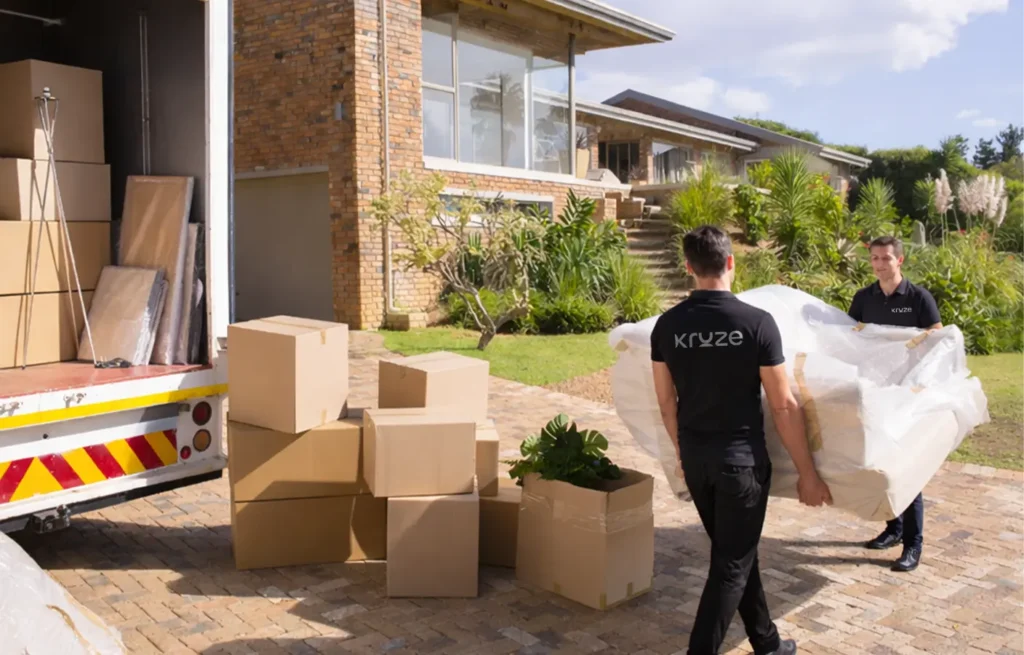
- Discretion is standard. Unmarked van, no company shirts, no conversation with the neighbours.
- Costs come from the same sheet as any other job. Full house clearance from £150, van load from £50.
If you take one thing from this page, take number one and number two. Everything else is logistics.
What we have learned doing these jobs
The clearance is the easy part. We can empty a house. Two people and a van shift a remarkable amount in a day.
What we have learned is that the houses we cleared with the person, at their pace, stayed clear. The ones cleared in a rush while the person was out, or over their objections, often did not. Sometimes we have been back within a year. That is not a judgement about anybody. It is what happens when you treat a mental health condition as a rubbish problem.
So the way we work these jobs is slower than a normal clearance, and it is meant to be.
Hoarding is a condition, not a mess
The NHS defines hoarding disorder as “a mental health condition where you collect lots of things and find it very difficult to get rid of them, even if it’s affecting your life”. It was once thought to be a form of obsessive compulsive disorder and is now treated as a separate condition in its own right. It is not laziness. It is not a lifestyle choice.
On causes, the honest answer is that nobody fully knows. The NHS says it is “not known exactly what causes hoarding disorder as there has not been a lot of research”. What it does list as things that make it more likely includes negative childhood experiences, being prone to anxiety, grief or a major life change, and a family history of hoarding. Mind adds that hoarding can be a symptom of other physical and mental health problems, that it may be more likely if you are neurodivergent, and that some people describe it as helping them cope with anxiety or distress.
The thing families most often get wrong follows from that. The person is not being difficult when they object. The objection is the condition. Someone asking you to leave a stack of newspapers is experiencing something closer to distress than stubbornness.
If you are reading this angry, tired and out of patience, that is understandable. Most people who call us about this are. But the approach that works is the slow one.
Where to get real support
This is the part of the page we would rather you acted on than the phone number at the bottom.
- Start with a GP. The NHS route to treatment begins there. It lists talking therapies, usually cognitive behavioural therapy, and antidepressant medicines that can help with anxiety. The NHS is also realistic about the pace, saying treatment “can help you to manage your symptoms, but it may take time”.
- HoardingUK describes itself as “the only UK National Charity solely focused on supporting people impacted by hoarding behaviour”. It is a registered charity, number 1172719. It runs a free and confidential national helpline, in-home support, peer and professionally led support groups, and individual advocacy. The helpline number is not published on their homepage, so go to hoardinguk.org or email info@hoardinguk.org for it rather than trusting a number you found elsewhere.
- Mind has a full set of pages on hoarding, including recognising it, causes, treatment, and a specific page on helping someone who hoards. That last one is the one to read if you are the family member.
- Your local council’s adult social care team can be asked for help where someone’s health or safety is at risk. In Leeds that is 0113 222 4401, weekdays 9am to 5pm, except Wednesdays when they open at 10am. You do not have to be a professional to call. Leeds say plainly that friends and family can call on behalf of someone who needs help. Other councils in West Yorkshire run their own arrangements, so check your own.
- West Yorkshire Fire and Rescue Service offers free Safe and Well visits. They check fire safety room by room, fit smoke detection where it is needed, and help work out an escape plan. They prioritise people most at risk, which includes people living alone, older people, and people with disabilities or health conditions. Request one on 0800 5874536 or through the referral form on their site. In a heavily filled property this is worth doing early.
A GP appointment costs nothing and will do more long term than any van we send. If you have not done that step, do that step first.
Approaching it with the person, not around them
Some things that have worked on jobs we have done.
Ask permission for the room, not the house. “Can we do the hallway” is answerable. “Can we clear the house” is not.
Start with the least loaded space. The hallway, the stairs, the bathroom. Not the bedroom, not boxes of a late partner’s things. Trust gets built on the easy rooms and spent on the hard ones.
Let them decide, every single item. It is slower. It is the entire point. Someone who has decided to let go of a thing does not grieve it the way someone who discovers it gone does.
Do not narrate. No sighing, no “you can’t possibly need this”. We do not, and family members should try not to either, though we know how hard that is at the end of a long day.
Let them keep some of it. If the deal that gets the exits clear is that four boxes stay, take the deal. A safe house with four boxes in it is a win. A perfect house that refills is not.
Nothing leaves without permission
This is a rule on our jobs, not a preference.
We do not make judgement calls about what is worth keeping. If the person says a thing stays, it stays, and we do not roll our eyes and we do not quietly load it while they are in another room. If they change their mind an hour later and want something back out of the van, it comes back out.
Things people have forgotten about turn up constantly, and they get set aside rather than loaded. Cash in books. Documents. Jewellery. Photographs and letters. On these jobs, more than any other, the person genuinely does not know everything that is in their own house, so we go slowly and we ask.
If a family member arranged the work and the person living there says stop, we stop. That occasionally makes for an awkward conversation with whoever is paying. We would rather have the awkward conversation.
The parts nobody warns you about
Biohazard and deep clean. Some properties have issues beyond possessions. Spoiled food, human or animal waste, needles, dead vermin, mould. That is not a moral failing, it is what happens when someone cannot reach the bin because the route to it is blocked. It means specialist handling, PPE and separate disposal streams, so we price it as its own job rather than pretending it is part of a house clearance. Our biohazard work starts from £45.
The floor. Under a heavily filled room there is often damage. Rotten boards, a leak nobody could reach, an appliance that failed years ago. Budget for finding something. Boilers, meters and stopcocks are sometimes unreachable too, so get them checked once the room is clear.
The emotional weight. Families underestimate this every time. The person may be distressed. You may find things about a parent or a sibling you did not know. Do not schedule the whole house in one weekend and expect anyone to be functioning by Sunday.
Vermin. An infestation gets dealt with before the clearance, not during it. Councils run pest control services, though they are usually charged rather than free and what you pay varies by council and by pest. Leeds, for example, charges £160 to treat mice, with that price covering all the visits needed rather than being per visit, and treats rats free for Housing Leeds tenants. Check your own council’s current charges before you book.
Discretion
Nobody needs to know.
Our vans are unmarked on these jobs if you want them to be. We do not wear branded shirts to the door, we do not stand on the pavement talking about the job, we do not photograph beyond what the quote needs, and if a neighbour asks, we are doing a house move. We can use rear access where it exists and park where it is least visible. Early morning is quieter than a Saturday afternoon.
Why it is usually several visits
A standard house clearance is a day. A hoarded property is normally not, and quoting it as one is the sign of a company that has not done many.
The reasons are practical. Decision fatigue is real, and after three or four hours of item by item choices most people are finished for the day, which is a human limit rather than a problem. Volume is often several times what the outside suggests. Access shrinks the work rate, because if the hallway is not clear, nothing comes out of the back bedroom at any speed. And sorting happens as you go, because things with value or meaning are mixed in with things that are not.
So we work in sessions. Exits and stairs first, because that is the safety issue. Then a room at a time. Then reassess. A large property can run to several days spread over weeks, and that is a normal shape for this work, not a failure.
What it costs
The same prices as any other clearance. There is no surcharge for the circumstances.
| Job | Price |
|---|---|
| A few items | from £24.99 |
| A room or garage (van load) | from £50 |
| Full house clearance | from £150 |
| Biohazard work | from £45 |
Multi-visit jobs are priced per visit on the same scale, so you are not committing to a total on day one before anyone knows what is in the back bedroom. More on our hoarder house clearance page.
We are a licensed waste carrier, CBDU597687, checkable on the Environment Agency’s public register on gov.uk, and you get a waste transfer note for everything removed. That matters here because the volumes are large, and a cheap unlicensed collector fly-tipping a hoarded house is a real risk and a very public one. Councils can issue a fixed penalty of up to £1,000 for fly-tipping, and a conviction carries an unlimited fine and up to five years’ imprisonment.
And the honest bit. If the person is not ready, do not book us. Book the GP. We will still be here in three months, and the clearance will actually hold.
FAQs
How much does a hoarder house clearance cost?
Full house clearance starts from £150 and a van load starts from £50, the same as any other clearance. Most hoarded properties need several visits, priced per visit rather than as one figure, so you are not committing to a total before anyone knows the volume.
Do you throw things away without asking?
No. Nothing is removed without the person’s agreement, item by item. If they say something stays, it stays. If they change their mind and want something back out of the van, it comes back out. Anything personal or valuable is set aside for them rather than loaded.
Can I arrange a clearance without the person knowing?
We would strongly advise against it, and we will not proceed if the person living there asks us to stop. Clearances done without agreement tend to distress the person and the property often refills. Talk to them first, and involve a GP or a support service.
How long does a hoarded property take to clear?
Usually several visits over days or weeks rather than one day. Decision-making is tiring, access is restricted until the exits are clear, and the volume is normally larger than it looks from outside. We start with the exits and stairs for safety, then work room by room.
What if there are biohazards or the property needs a deep clean?
That is handled as a separate specialist job with proper PPE and disposal streams, starting from £45. Spoiled food, waste, needles and mould are common in these properties and are a consequence of blocked access, not a character flaw. We plan for it rather than being surprised by it.
Where can a family get real help with hoarding?
Start with a GP. HoardingUK (registered charity 1172719) runs a free confidential national helpline and in-home support, and you can reach them via hoardinguk.org. The NHS publishes guidance on hoarding disorder and treatment routes at nhs.uk, and Mind has a full set of pages including one on helping someone who hoards. Adult social care can be asked for help where health or safety is at risk, and in Leeds family members can call 0113 222 4401 themselves. West Yorkshire Fire and Rescue Service do free Safe and Well visits on 0800 5874536.
Does clearing the house solve the problem?
On its own, no. Hoarding is a recognised mental health condition, and an empty house does not treat it. Without support in place, properties commonly refill. The clearances that hold are the ones done at the person’s pace, with their agreement, alongside proper help.
If you want to talk it through before deciding anything, call or WhatsApp 07436 120271. We cover Leeds, Bradford, Halifax, Huddersfield, Wakefield, Harrogate and Barnsley. No pressure and no obligation to book.
Need it collected? Kruze offers hoarder house clearance across Leeds and West Yorkshire. Licensed carrier CBDU597687, priced up front, all the lifting done for you.
Related guides